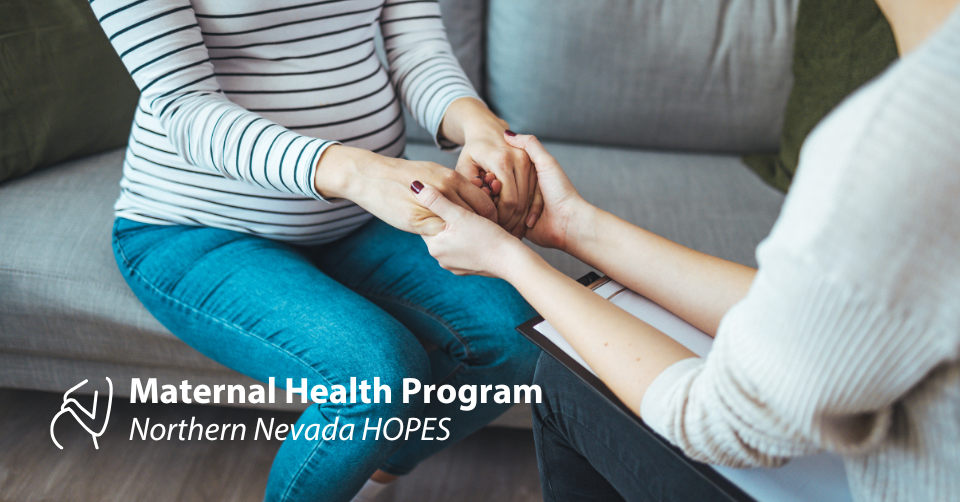
When Sarah* first connected with Northern Nevada HOPES’ Perinatal Care Program, she was 20 weeks pregnant and facing overwhelming challenges. At 26 years old, she had been living with opioid use disorder since her early teens. She was experiencing homelessness, struggling to meet basic needs, and had not received consistent prenatal care. Like many women facing complex barriers during pregnancy, she had encountered stigma and systems that seemed difficult to navigate.
What Sarah wanted was simple:
“I want a healthy baby.”
That goal became the foundation of her care at HOPES.
Through the Perinatal Care Program, Sarah was connected to a multidisciplinary team that worked together to support both her health and her pregnancy. Peer support specialists, nurses, behavioral health providers, case managers, and addiction medicine specialists surrounded her with care designed to address the realities of her life, not just her medical needs.
The journey was not easy. There were missed appointments, setbacks, and moments of crisis. But the HOPES team never stopped reaching out. Instead of treating those challenges as reasons to disengage, staff continued building trust and providing support when it was needed most.
That trust became critical late in her pregnancy.
After leaving the hospital during early labor, Sarah faced serious health risks for both herself and her unborn child. Hospital staff contacted HOPES, and within minutes the Perinatal Care Program team mobilized. Through relationships built over months of support, a Peer Support Specialist was able to reconnect with Sarah and encourage her to return for care. She agreed.
Shortly after returning to the hospital, Sarah safely delivered a healthy baby boy.
While every family’s journey looks different, this story reflects what makes community health centers uniquely effective. At HOPES, maternal health extends beyond prenatal appointments. It includes behavioral health care, substance use treatment, housing support, care coordination, peer support, and trusted relationships that help patients stay connected to care through some of life’s most challenging moments.
Today, the HOPES Perinatal Care Program serves pregnant individuals facing some of the region’s greatest barriers to care, including substance use disorders, unstable housing, limited access to prenatal services, and complex social needs. The program’s integrated model helps mothers and babies achieve healthier outcomes while demonstrating the vital role community health centers play in advancing maternal health.
During National Health Center Week, we celebrate every mother, baby, and family whose lives are strengthened through access to compassionate, high-quality care. Sarah’s story is a reminder that when healthcare teams meet people where they are and refuse to give up, healthier futures become possible.
*Patient name changed to protect privacy.